
Exegesis for Rodrigo Vera and Gonzalo Carrasco
This commentary has a pessimistic tone —positively or creatively pessimistic, perhaps skeptical, but with good intentions. A tone that comes from Oswald Spengler’s statement “Optimism is cowardice.” But also from Nietzsche’s aphorism, when he says that “from a certain height everything coincides: the works of the artist, the ideas of the philosopher, and the good deeds.” Here we have the opportunity to see and debate present confrontations with the past and future, in which common concepts appear that I would like to suggest: craft and care.
We saw two ways of approaching design from other disciplines: arts on one side and architecture on the other. But also two extremely different modes of curatorial practice: Rodrigo Vera presents us with an experience in design about design; Gonzalo Carrasco, a design experience from ecology in which architecture subtly appears.
What are they doing there, Rodrigo and Gonzalo, in those instances perhaps foreign to their fields? What drives them to stay there, and not turn back?
Because as writer Tobias Wolff said: “the artist is not one who can make art, but one who cannot not make it” —that is, for whom art is inevitable, and therefore, for whom the potential for work to manifest remains ever-present.
Would it be pertinent to ask here about the work, about the creative work in Rodrigo and Gonzalo’s experiences? Is there an artwork? Perhaps. But if so, we should ask ourselves, returning to Wolff, where and when could there not not have been a work?
In Rodrigo’s case, the work appears as risk, will, and decision. The bet on the clay candlestick of Quinchamalí, the attempt with the wicker basket of Chimbarongo, the cleverness of the puzzle chair analysis, displaying it unfolded in a certain way, and the danger of placing the Valparaíso School at the origin of Chilean design. An intellectual experience is created that reveals itself above all in the invention of a diagram or constellation of relationships. Rodrigo’s work values and intentionalizes the past. His work emerges through the how.
In Gonzalo’s case, the work appears as sensitivity and care. His exhibition emphasizes the smallness of seeds in spheres of light, radicalizes the selection criteria for projects, in such a way that what is revealed is almost not architecture. A rather sensory, perhaps emotional —melancholiac, in his words—, experience is created, which reveals the reality of the present in tension with a probable future and a possible one.
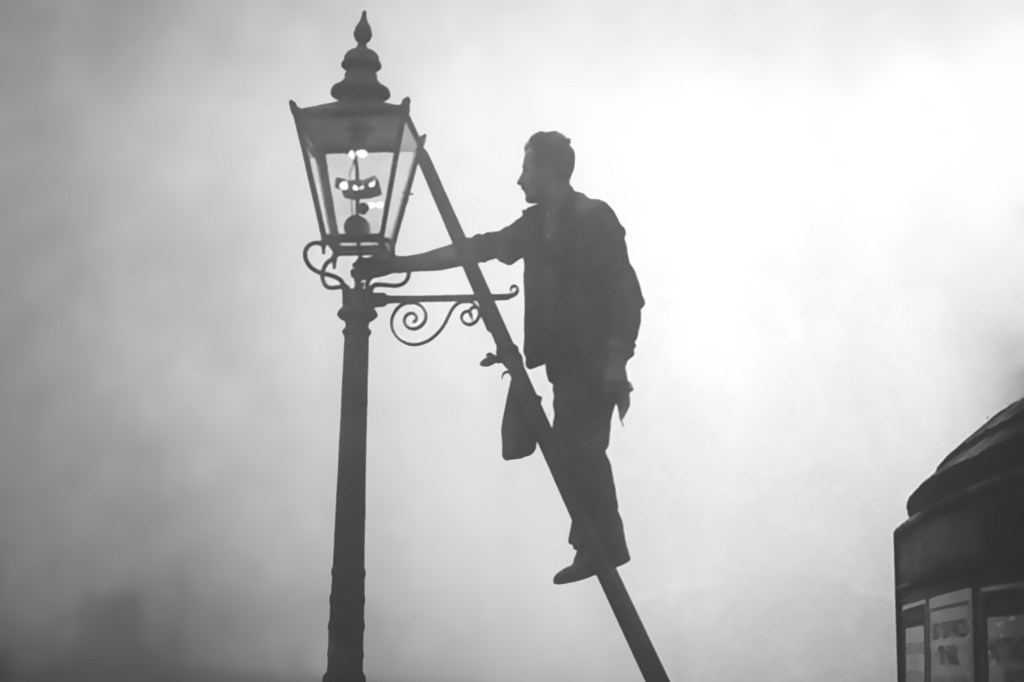
Each has their excuse. Rodrigo wants to insert Chile’s traditional crafts into the realm of international design. Craft, as indicated by the exhibition’s name itself: Crafting (Modernity). Gonzalo wants to repair the damage we have caused to the planet, starting with small initiatives. In both cases, figures appear with many similar attributes: the craftsman and the activist. Both act through faith and destiny, like the lamplighter from The Little Prince, who dedicated his life to lighting and extinguishing his lamp because this was his consigne.
Gonzalo and Rodrigo address the problem of technique: positively rejecting it to recover the natural entanglement of which we are part, and shedding light on our inevitably creative ways of relating to nature and its materials.
Friedrich Junger said in the late 1940s that technique, and later technology, being a rational tactic, does not enable, and has never enabled, subsequent leisure or abundance, but rather a state of scarcity. The perfection of technique and its progressive rationalization are signs, rather, of the exhaustion of our own natural substance. If this is so, our position would not be, or should not be, to seek in technique and technology a solution for the problems we have been causing, but rather to reject and ignore any influence of technique and technology.
However, even so, the greatest of problems would persist. Oswald Spengler said that “human technique (…) Is the only case, in all the history of life, in which the individual being escapes the coercion of the species.” The human being is, for him, a predatory animal, a kind of eagle, that having two parallel eyes directed forward, and a hand with an opposing thumb inseparable from an artificial tool, we will always see the world as prey and our fellow beings as adversaries. Let us hope it is not quite so, and that the art of Gonzalo and Rodrigo might reorient us..
I conclude with a cliché and an inevitable crutch. We had two guests, both doctors, both researchers, both academics. Two examples. Two ways of creating from academia. Two efforts to sustain the passion for art in environments perhaps adverse to creation. Gonzalo and Rodrigo are the proof, necessary and urgent, that we can and must have researchers who create and materialize artistic works through their research.
This text was first presented on November 7, 2024, at the School of Architecture, Finis Terrae University, as part of the “Design and Modernity in Chile” Colloquium Series. The text responds to lectures by Rodrigo Vera and Gonzalo Carrasco on “Objects and Curatorship”.
Exhibitions:
- “Crafting Modernity: Design in Latin America, 1940–1980“, Museum of Modern Art, New York (March 8–November 10, 2024). Organized by Ana Elena Mallet (Guest Curator), and Amanda Forment (Curatorial Assistant), with Rodrigo Vera as Curatorial Advisory Board Member. [link]
- “Moving Ecologies“, Pavilion of Chile at the 18th International Architecture Exhibition – La Biennale di Venezia (May 20–November 26, 2023). Curated by Gonzalo Carrasco Purull and Beals & Lyon Arquitectos, with Belén Salvatierra as Art Director. Commissioned by the Ministry of Cultures, Arts and Heritage of Chile. [link]
 if...
if... 
Leave a comment